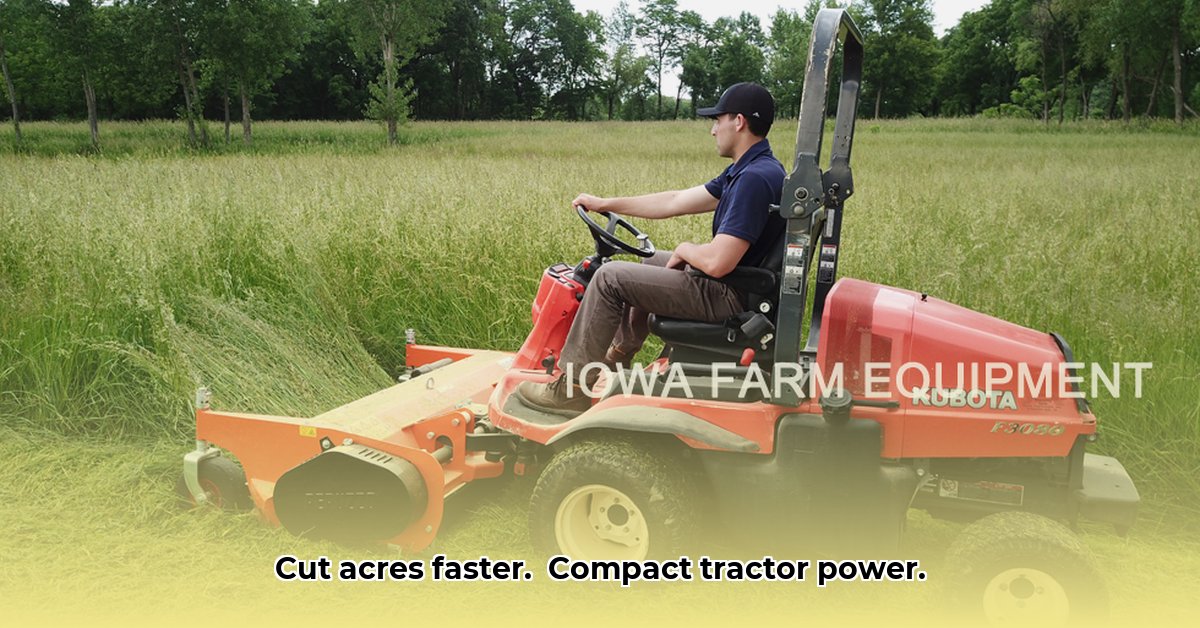
Tractor Front Mower: Mastering Brush Cutting for Increased Efficiency
Conquering overgrown brush and reclaiming land can be a significant undertaking. However, with the right tractor front mower, this daunting task transforms into an efficient and manageable process. This guide provides a comprehensive overview of choosing, operating, and maintaining a mower to help you efficiently clear even the toughest brush. Are you ready to boost your land management efficiency? For more in-depth information, check out this helpful resource on tractor brush cutters.
Choosing the Right Tractor Front Mower: A Smart Investment
Selecting the appropriate tractor front mower hinges on your specific needs and the type of brush you're tackling. Several crucial factors influence your decision.
Cutting Capacity (Diameter): The diameter of the thickest branches you’ll encounter dictates the mower's required cutting capacity. Mowers designed for smaller debris will struggle with thicker brush and may sustain damage. Mowers rated for larger diameters (e.g., 1.5 inches or more) provide superior effectiveness and durability.
PTO (Power Take-Off) Compatibility: Ensure the mower is compatible with your tractor's PTO system. The PTO transmits power from your tractor to the mower's blades, enabling the cutting operation. Incompatibility can cause damage to both machines. Always double-check specifications.
Hydraulic Power: Hydraulically powered mowers generally offer superior performance, especially with dense brush. Smoother operation reduces stress on both the machine and the operator. While the initial cost may be higher, the increased control and longevity often justify the investment.
Quick-Hitch Systems: Quick-hitch systems facilitate quick attachment and detachment of the mower, minimizing downtime. This efficiency boost translates directly into increased productivity.
Safety Features: Prioritize safety features such as blade guards, easily accessible emergency shut-off switches, and clear safety signage. Your well-being is paramount.
Operating Your Tractor Front Mower: A Step-by-Step Guide
Safe and effective operation requires a systematic approach. Follow these steps meticulously:
Pre-Flight Check: Before starting the tractor, inspect the mower for damage, loose bolts, or other issues. Check hydraulic fluid levels (if applicable) and ensure PTO connections are secure. This preventative measure can save significant time and cost later.
Secure Attachment: Attach the mower to your tractor using the quick-hitch mechanism, following the mower's manual precisely. Improper attachment can be dangerous and ineffective.
Engage the PTO Carefully: Engage the PTO according to your tractor's instructions. Avoid sudden movements to prevent undue stress on the system. Start slowly and gradually increase speed.
Controlled Operation: Maintain a safe and steady speed, adjusting as necessary based on terrain and brush density. Avoid overloading the system, which can lead to premature wear and tear or breakage.
Post-Operation Maintenance: Clean the mower deck after each use, removing debris to prevent build-up which affects cutting performance. Regular lubrication of moving parts extends the mower's lifespan. Refer to your manufacturer's instructions for a detailed maintenance schedule.
Troubleshooting Common Issues: Quick Fixes and Preventative Measures
Even with careful operation and maintenance, problems can arise. Here are some common issues and solutions:
Mower Won't Engage: Check PTO engagement, hydraulic fluid levels (hydraulic mowers), and fuses. If problems persist, consult your owner's manual or a qualified technician.
Blade Stalling or Poor Cutting: Clear debris from the deck and sharpen or replace dull blades. Dull blades reduce efficiency and can damage the mower.
Hydraulic Leaks (Hydraulic Mowers): Hydraulic leaks are serious and require immediate attention due to safety and damage concerns. Locate and repair the leak promptly.
Comparing Tractor Front Mowers: Navigating the Market
A comprehensive comparison of all models requires more data, but the Hardee Brush Tiger serves as a case study to illustrate key features. Further comparative analyses will be provided in future updates.
| Feature | Hardee Brush Tiger (Example) | Other Models (Future Data) |
|---|---|---|
| Cutting Capacity (inches) | Up to 1.5 | Variable; Check Manufacturer Specs |
| PTO Compatibility | Yes | Variable; Check Manufacturer Specs |
| Hydraulic Operation | Yes | Variable; Check Manufacturer Specs |
| Quick Hitch | Yes | Variable; Check Manufacturer Specs |
| Approximate Price Range | (Obtain from Dealer) | Variable; Check Manufacturer Specs |
Risk Mitigation: A Proactive Approach
Understanding potential risks and implementing mitigation strategies is crucial.
| Risk Factor | Mitigation Strategy |
|---|---|
| Hydraulic System Failure | Regular inspection and maintenance, prompt leak repair. |
| PTO Issues | Adhere to PTO engagement procedures; regular inspection. |
| Blade Damage | Careful operation, timely sharpening/replacement. |
| Quick-Hitch Problems | Correct usage and regular maintenance. |
| Operator Safety | Always wear appropriate PPE (Personal Protective Equipment). Follow all safety instructions. |
This guide provides a foundation for using compact tractor rotary mowers for brush management. Always consult your equipment's manuals and seek professional help when needed. Your local agricultural equipment dealer is an invaluable resource. Future updates will include more comprehensive comparative data.
How to Choose the Best Compact Tractor Rotary Mower for Brush Management
Key Takeaways:
- Matching tractor horsepower to cutter width is crucial for efficiency and longevity. A common (though debated) guideline suggests 5 PTO hp per foot of cutter width.
- Prioritize build quality over sheer weight. A well-built, lighter mower often outperforms a heavier, poorly-constructed one.
- Regular maintenance, including blade sharpening, extends mower lifespan and reduces long-term costs.
- Consider your budget and total cost of ownership. A higher initial investment in a quality model often pays off due to enhanced durability and reduced repairs.
Sizing Up Your Needs: Matching Mower to Tractor
Choosing the right mower begins with understanding your needs. What type of brush are you clearing? Lighter saplings or thick vines? This will dictate the mower's specifications. Your tractor's horsepower is pivotal; underpowering the mower leads to damage and frustration, while overpowering it is inefficient. Aim for a proper match.
Assessing Rotary Cutter Features: Beyond Horsepower
Key features significantly impact performance:
- Cutting Diameter: This directly relates to the brush size you can handle.
- PTO Compatibility: Ensure compatibility with your tractor's PTO.
- Hydraulic Functionality: Hydraulic tilt and lift mechanisms reduce operator strain.
- Quick-Hitch Systems: These simplify attachment and detachment, saving time.
- Safety Features: Look for features like a slip clutch to prevent damage from obstructions.
Maintenance: The Unsung Hero of Brush Management
Regular upkeep extends lifespan and improves efficiency. This includes regular oil changes, blade sharpening, and inspections for wear and tear. Proper storage also protects your investment.
Troubleshooting Common Problems
Common issues include clogging (check for blockages and sharp blades), uneven cutting (check blade alignment and PTO engagement), and belt issues (regular inspection and replacement).
Putting it All Together: Making Your Choice
Choosing the right rotary cutter balances tractor horsepower, brush type, budget, and maintenance ease. Research models, read reviews, and compare specifications. A higher initial investment in a quality mower often pays off in the long run.